DGCA FDTL Rules Simplified for Indian Pilots (2025 Update)
A No-Nonsense Guide to CAR Section 7 Series J Part III – Rev 2
Introduction to Indian DGCA FDTL
If you’re flying as a commercial pilot in India, you’ve probably heard of the new Indian DGCA FDTL rules. And if they’ve left you scratching your head, you’re not alone.
The latest revision - CAR Section 7 Series J Part III Rev 2, released by DGCA India - comes into effect in two phases. Phase 1 has been implemented on July 1, 2025. and Phase 2 is said to be implemented on November 1 2025. It’s designed to protect flight crew from fatigue, but the rules can feel complex.
DGCA CAR SEC 7 SEREIS J PART 3.pdf
Download PDF • 245KB
This guide breaks it all down, with examples, so you know exactly how to stay legal, safe, and well-rested.
BONUS: We have also made a “Quick Information Sheet” that you can download and keep for personal reference.
DGCA FDTL Quick Information Sheet.pdf
Download PDF • 1.05MB
Let’s dive into the blog.
What Is FDTL?
FDTL = Flight Duty Time Limitation It’s the DGCA-mandated framework that regulates:
- How long you can be on duty
- How many hours you can fly per day
- How much rest you must get between duties
- How many consecutive nights you can operate
- How many cumulative hours are allowed across weeks and months
Key Terms, Explained Simply
| Term | What It Means |
| FDP | From report time to engine shutdown after the last flight |
| Flight Time | From chocks-off to chocks-on |
| WOCL | “Window of Circadian Low” = 2:00 AM to 6:00 AM local time |
| Local Night | Any 8 continuous hours between 10 PM and 8 AM |
| Rest | You’re completely off duty, not even on standby |
| 168-Hour Rule | Your next weekly 48-hour rest must start within 168 hours of the previous one. 168 hrs is 7 days, so even on 7th day you can have some duty upto the 168hrs limit |
| WOCL | Window of Circadian Low (2 AM to 6 AM) – your body’s natural low point |
| WOCL ENROACHMENT | FDP reduces as per the duty period * Starts during WOCL → reduce by 100% of overlap (max 2 hours) * Ends in or spans WOCL → reduce by 50% of the overlap |
Daily Limits: How Long Can You Fly or Be On Duty?
For 2-Pilot Operations
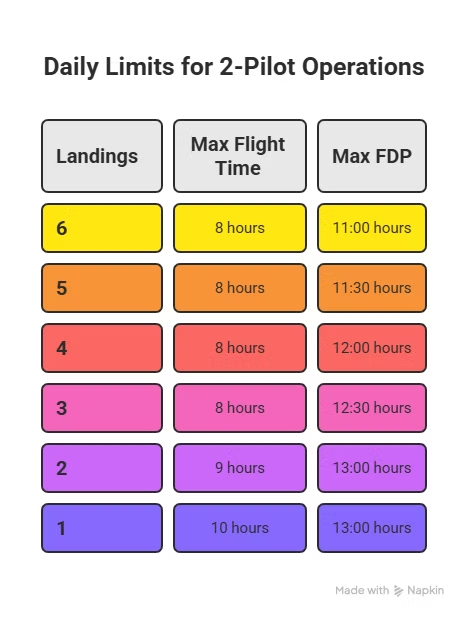
FDTL DAILY LIMITS FOR 2 PILOT OPERATIONS
The more landings you do, the shorter your duty day. This is because takeoffs and landings are more fatiguing than cruise segments.
For Augmented Crew (3 or 4 Pilots)
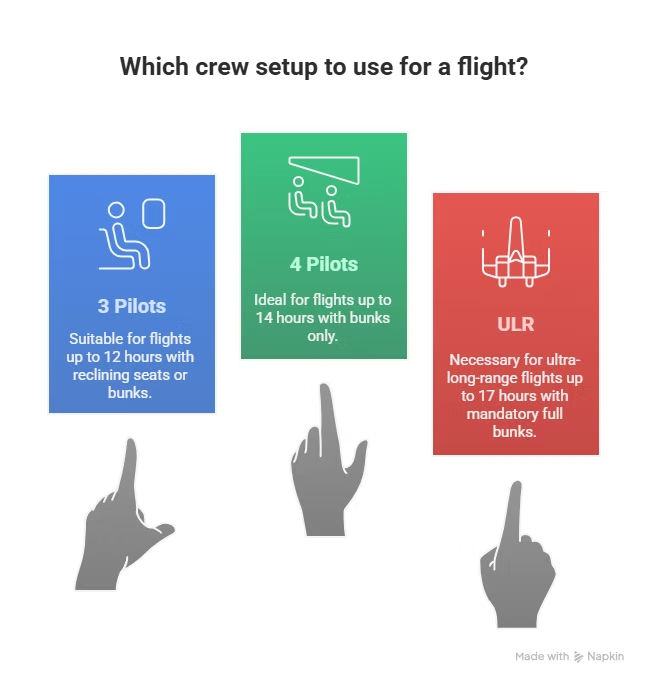
FDTL FOR AUGMENTED CREW AND ULR OPERATIONS
ULR applies to city-pairs where sector time regularly exceeds 14 hours (e.g. Delhi–New York nonstop).
Rest Rules: Before and After Duty
| Situation | Minimum Rest Needed |
| After a normal duty | Same as your last FDP or at least 12 hours |
| After crossing 3–7 time zones | 36 hours + 2 local nights |
| After crossing 7+ time zones | 72 hours + 3 local nights |
| After long duty (>18 hours incl. positioning) | Must include at least 1 full local night |
| After standby | At least 12 hours or more, depending on what followed standby |
The 168-Hour Weekly Rest Rule
This is one of the most misunderstood parts of the DGCA regulation.
Here’s the actual requirement:
- You must get 48 continuous hours of rest
- That rest must include 2 local nights
- It must start within 168 hours of the end of your last 48-hour rest
- 168 hrs equates to 7 blocks of 24 hrs each
Valid Example:
- Last weekly rest ended: 1st April, 07:00 AM
- Next weekly rest must start before: 8th April, 07:00 AM
- You start rest on 7th April at 06:00 AM → Valid
Invalid:
- You start rest on 8th April at 09:00 AM → Violation (2 hours late)
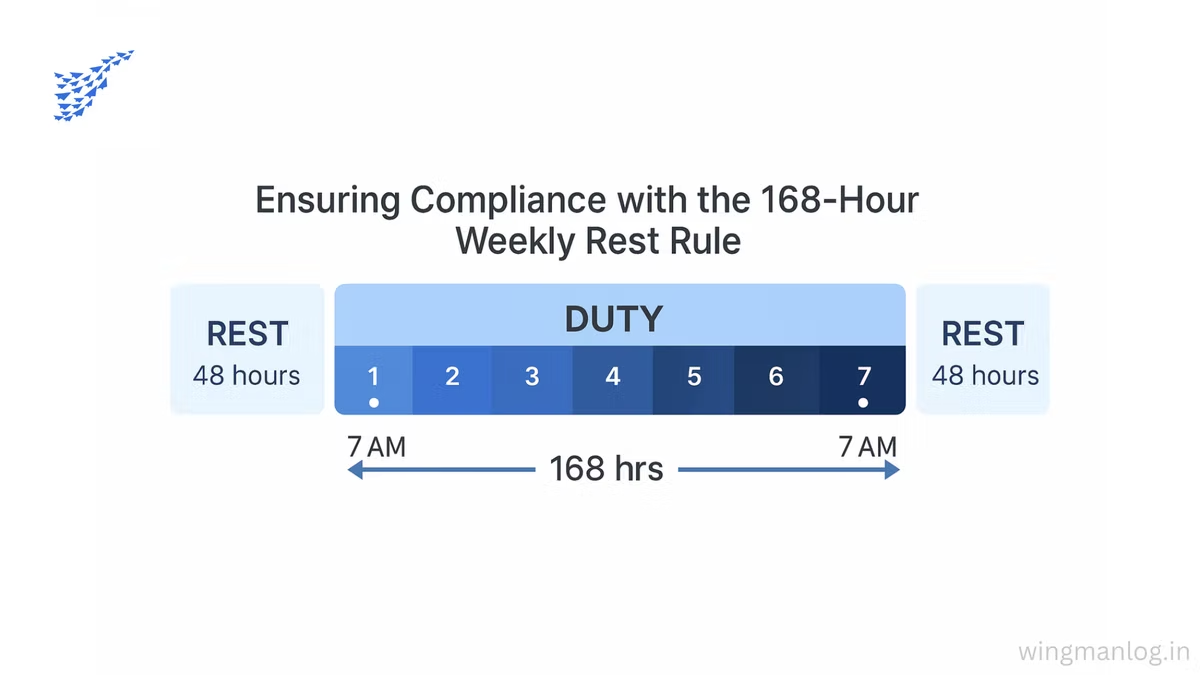
Myth : With the new 48 hr rest rule, I must get 2 OFF days every week.
Reality : 48 hr rest is required after 168 hrs of duty, which equates to 7 blocks of 24 hrs, after which your rest can start. So your rest can start on 7th day from the time your last rest period ended.
48 hours rest explained as per DGCA CAR SEC 7 SERIES J PART III
Even a 10-minute delay is considered non-compliance by DGCA.
Standby Rules: What Counts Toward FDP?
| Type of Standby | How It’s Counted |
| At Airport (max 8 hrs) | 100% counted toward FDP and cumulative limits |
| Home/Hotel – duty starts within 6 hrs | 0% counted |
| Home/Hotel – duty starts after 6 hrs | 50% of the standby counts toward FDP |
| If standby ends with no assignment | 25% counted toward cumulative duty |
Positioning (Deadheading)
- If positioning before a duty, it counts fully toward your FDP
- Positioning after duty, does not count as rest
- Time spent positioning does not count as rest.
- If FDP is extended post-positioning (e.g. split duty), it counts as an extra landing
Night Duty Restrictions
You can operate a maximum of 2 consecutive night duties (any duty spanning 12 AM to 5 AM).
After that, you need:
- 24 hours of rest
- At least 1 full local night
- A 2-hour buffer before your next FDP
Cumulative Limits – Stay Within the Caps
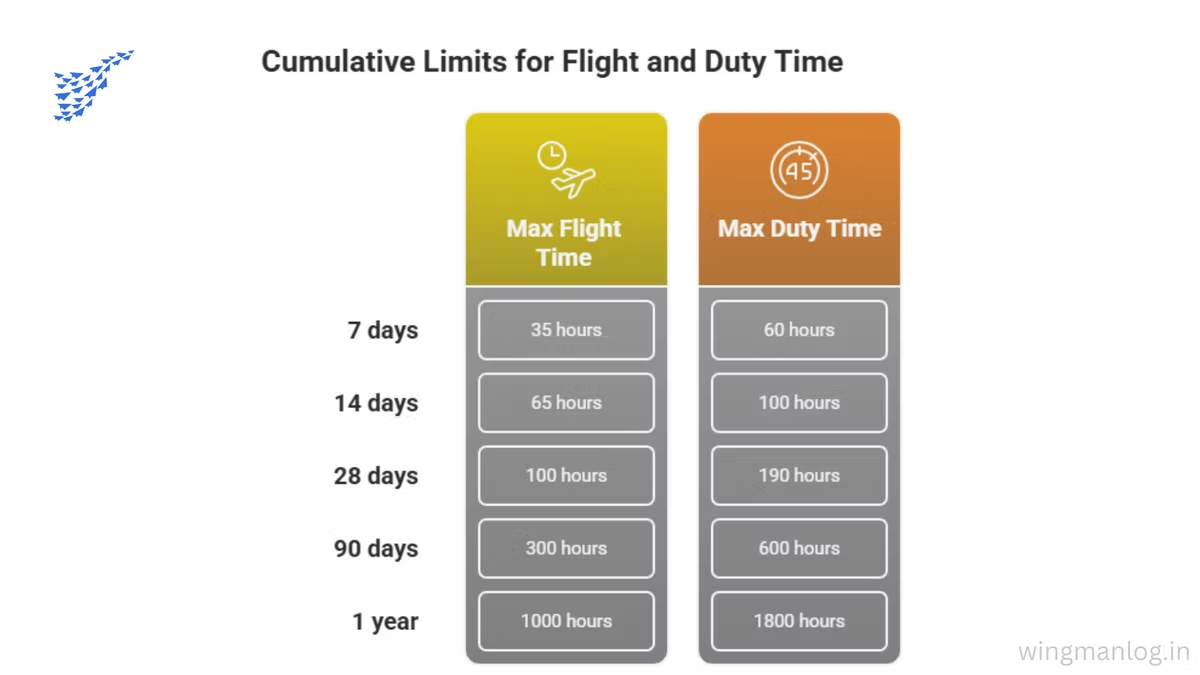
CUMULATIVE FDTL AN FDP AS PER DGCA CAR SEC 7 SERIES J PART III
If you exceed these, you’ll need rest resets - and possibly get flagged in internal audits or DGCA inspections.
Fatigue Reporting – Use It When Needed
If you feel exhausted, unfit to fly, or not mentally sharp:
- File a fatigue report
- Airlines in India are required by DGCA to have non-punitive systems
- It’s confidential and meant to protect safety - not penalize you
Don’t try to “push through.” Fatigue is a safety risk - not a sign of weakness.
Final Checklist for Indian Pilots
- Track your 168-hour window carefully
- Use apps or timers to manage FDP and rest
- Be mindful of WOCL encroachment
- Don’t let standby or positioning silently eat into your FDP
- Stay within cumulative hour limits
- Ask your rostering or safety team if you’re unsure
Avoid manual tracking. Log hours, rest, and FDP compliance automatically with Wingman Pilot Logbook.

DGCA-compliant logbook for Indian pilots
It’s built for Indian pilots and supports DGCA-compliant formats, eGCA sync, and airline roster integrations.
← All articles