Find the best pilot logbook binder: features, fit, and a digital backup
A pilot logbook binder is the cover and ring system that holds your logbook pages, certificates, and endorsements in one place. The right one keeps your flight records flat, protected, and easy to update for years, while a poorly made binder lets pages tear loose, curl, or go missing at exactly the moment an examiner or employer asks to see them. This guide explains what separates a good pilot logbook binder from a generic office folder, how to match a binder to the way you actually fly, and how to pair it with a digital backup so your hours are never tied to a single physical object.
The advice here is written to be useful wherever you fly. The features that matter in a binder are broadly the same across regions, so whether you train under the FAA, EASA, the UK CAA, the GCAA, DGCA, or another authority, you can use the same checklist to choose well.
Why a good pilot logbook binder matters
Your logbook is not a casual notebook. For most authorities it is a personal record of flight experience that supports licence applications, ratings, recency, and employment checks, and many regulators expect you to keep it accurate and retain the records for a defined period [VERIFY]. That makes the binder around it more than a cosmetic choice.
A well chosen pilot logbook binder gives you four practical things:
- Protection. Logbooks are carried in flight bags, opened on crew tables, and handled often. A sturdy cover and a clean ring mechanism keep the pages from creasing, tearing, or detaching.
- Order. Dividers and tabs let you separate flight types, training records, and endorsements, so you can find a specific entry quickly instead of leafing through every page.
- Capacity to grow. A binder that accepts more sheets means you are not forced to start a second volume or migrate records before you are ready.
- A presentable record. When you hand a logbook to an examiner, an interview panel, or a licensing office, a neat and intact binder makes the record easy to review.
Choosing the right binder up front saves you the slower, riskier job of rescuing a damaged or disorganised logbook later.
Features to look for in a pilot logbook binder
When you compare options, work through these features in order of how much they affect daily use.
Size and page compatibility
Confirm the binder fits the page format you actually use. Logbook sheets come in several standard sizes, and a binder built for one hole pattern will not hold another cleanly. Check the ring spacing and the page dimensions before buying, and leave room for certificates or endorsement sheets you may add alongside flight entries.
Ring mechanism
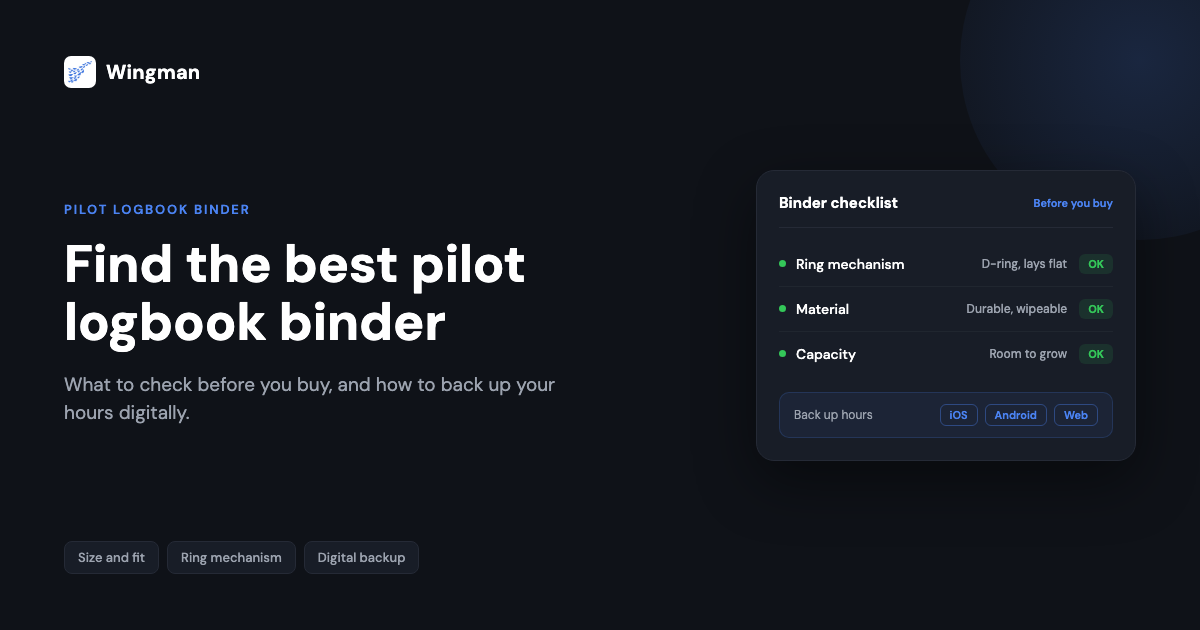
The ring is the part you interact with every time you add a page, so it deserves attention. D-ring mechanisms generally hold more sheets and keep pages flat and aligned, while round rings can let pages arc and rub. A smooth, well seated ring that closes flush protects the punched holes from tearing.
Material and build quality
Look for covers in durable materials such as leather, faux leather, or heavy-duty board with a wipeable surface. These resist scuffing, handle the occasional spill, and hold their shape in a packed flight bag. A reinforced spine and edges add years to the binder’s life.
Storage and organisation
Inner pockets, card slots, and a pen loop turn the binder into a small record kit rather than just a cover. Tabbed dividers let you split solo, dual, night, simulator, and cross-country entries so a reviewer can jump straight to the relevant section.
Portability
Pilots move, so weight and bulk matter. A binder that is rigid enough to protect pages but slim enough to slide into a flight bag is the practical middle ground. Avoid oversized binders unless you genuinely log enough to need the volume.
Page protection extras
Clear sleeves for certificates and endorsements, and acid-free or archival-quality pages where available, keep important documents readable over a long career. These details cost little and prevent fading and handling damage.
How to choose the right pilot logbook binder
Use this short sequence to narrow the field to a binder that suits how you fly rather than the first one you see.
- Estimate your logging volume. If you fly often or are building hours toward a commercial licence, choose a larger ring capacity so you are not refilling constantly. If you fly occasionally, a slimmer binder is easier to carry.
- Match it to your environment. For frequent travel, ramp work, or training in variable conditions, prioritise rugged, wipeable, water-resistant materials over a delicate finish.
- Plan for growth. Pick a binder and page system that can expand as your hours and endorsements accumulate, so your records stay in one continuous volume.
- Check format compatibility. Confirm the ring layout and page size match your logbook sheets and any supplementary documents you keep.
- Confirm it fits your flight bag. Measure against the bag you actually use, so the binder travels with you instead of staying at home.
Choosing flow

How to maintain your logbook binder
A good binder lasts longer and protects your records better with a little routine care.
- Log promptly. Record each flight soon after it ends, while the details are fresh, so entries stay complete and accurate.
- Use labelled dividers. Separate flight types and training records so reviews and audits are quick.
- Protect key documents. Keep certificates and endorsements in clear sleeves to prevent creasing and fading.
- Keep the cover clean. Wipe the exterior occasionally so the binder stays presentable for interviews and licence checks.
- Back up your records. Periodically capture your pages digitally so a single damaged or lost binder cannot erase your history.
That last point is the one most pilots underrate, and it is worth its own section.
Pair your binder with a digital backup
A paper logbook binder protects the physical record, but it cannot protect against the binder itself being lost, damaged, or left behind. The simple answer is to keep your hours in a digital logbook alongside the paper one, so you always have a second, searchable copy.
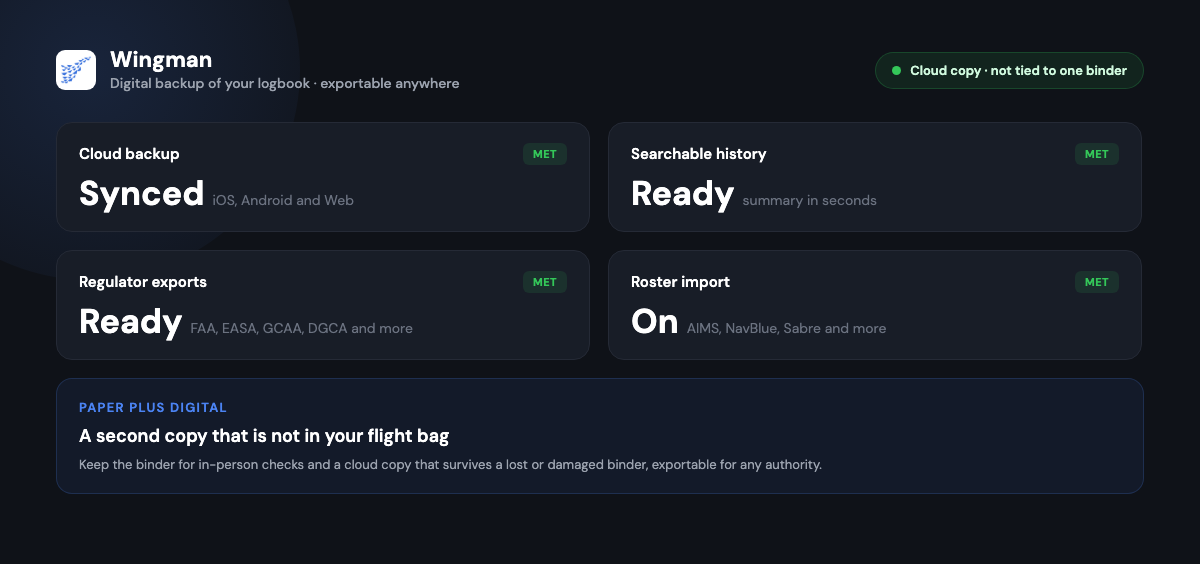
Wingman is a digital pilot logbook used by 30,000+ pilots across 400+ airlines, and it keeps your hours, currency, and licence details in one place across iOS, Android, and Web. Because it runs in the cloud, your records are not tied to a single object in your flight bag, and you can pull up a summary of your experience in seconds when an interview or licence renewal calls for it.
It is built to work wherever you fly. Wingman produces regulator-compliant exports for the FAA, EASA, UK CAA, GCAA, DGCA, GACA, NZCAA, HKCAD, CASA, and CAAS, so the same logbook serves you across borders and career moves. If you fly the line, it can import your roster automatically from systems including AIMS eCrew, NavBlue RAIDO, CAE Crew Access, ARMS, CESAR, Sabre, FLICA, and PDC CrewConnex, which removes most of the manual entry that paper alone demands. There is a free tier up to 250 logged hours, so you can run a digital copy alongside your binder at no cost while you decide whether to keep both. You can start in the Wingman web app and add the mobile app when it suits you.
Keeping both a quality binder and a digital backup gives you the best of each: a presentable physical record for in-person checks, and a resilient, exportable copy that survives whatever happens to the paper.
Where to find a quality pilot logbook binder
General office binders rarely match the durability, page compatibility, and layout that aviation record-keeping needs. A binder made for pilots is built around standard logbook pages and the way crews actually carry and use them.
The Wingman smart logbook binder is designed with pilots in mind, with robust construction for long-term use, capacity for extensive flight logs, compartments for accessories, and a clean, professional cover. Choosing a binder built for the job, and pairing it with the digital backup above, gives you a record-keeping setup that holds up across a long flying career.
Frequently asked questions
What is a pilot logbook binder?
A pilot logbook binder is the cover and ring system that holds your logbook pages, certificates, and endorsements together. A good one keeps pages flat and protected, lets you organise entries with dividers, and travels easily in a flight bag.
What size pilot logbook binder do I need?
Choose a ring capacity that matches how much you fly. Pilots building hours toward a commercial licence benefit from larger capacity and room to grow, while occasional flyers can use a slimmer binder. Always confirm the ring layout and page size match your logbook sheets before buying.
What is the best material for a logbook binder?
Durable, wipeable covers in leather, faux leather, or heavy-duty board hold up best to frequent handling and the occasional spill. A reinforced spine and edges, plus a smooth D-ring mechanism, add years of service.
Do I still need a paper logbook binder if I use a digital logbook?
Many pilots keep both. A paper binder gives you a presentable physical record for in-person checks, while a digital logbook such as Wingman provides a searchable, exportable backup that is not tied to a single object and produces regulator-compliant exports across regions.
How do I protect my logbook records from loss or damage?
Store certificates in clear sleeves, keep the binder in your flight bag rather than loose, and back up your hours in a digital logbook. A digital copy means a lost or damaged binder does not erase your flying history, and you can regenerate a clean record on demand.
← All articles