Flight dispatcher registration on eGCA: a step-by-step guide
eGCA is the e-Governance of Civil Aviation platform run by the Directorate General of Civil Aviation (DGCA) in India. If you want to work as a flight dispatcher, this is the portal where you create your record, submit your documents, and obtain the flight dispatcher number that identifies you in the DGCA system. The portal lives at https://egca.gov.in, and registering here is the first administrative step most aspiring dispatchers take.
This guide walks through flight dispatcher registration on eGCA in plain terms: what you need before you start, the steps for a new applicant, the steps if you already hold a flight dispatcher number, and one point that confuses a lot of people, the difference between registering on eGCA and completing a DGCA-approved flight dispatcher course. The registration steps are written as numbered how-tos you can follow with the portal open in another tab.
What eGCA flight dispatcher registration is for
eGCA is the single online front door for most DGCA licensing and personnel processes. When you register as a flight dispatcher, you create a user account tied to your personal details and, on successful processing, a flight dispatcher number. That number is your reference identity with DGCA. It links the documents you upload, any applications you make later, and the records that build up over your career.
Registration is an administrative formality, but it is not optional. Without an eGCA account and a valid flight dispatcher record, you cannot complete the downstream steps that depend on it. The flow differs depending on whether you are a first-time applicant or an existing dispatcher returning to the system, so it is worth confirming which path applies to you before you begin.
If you are also setting up other DGCA personnel records, the registration mechanics on eGCA are similar across roles. Our walkthrough on the pilot registration process with eGCA and the guide on how to get your eGCA ID cover the parallel flow for flight crew, which helps if you are managing more than one record.
Before you register: documents and prerequisites
Getting your documents ready before you open the portal saves you from stalling halfway through. The requirements differ slightly between a new applicant and an existing dispatcher.
For a first-time (aspirant) flight dispatcher
- Age: you should be at least 21 years old. [VERIFY]
- A valid email address and mobile number that have not already been registered on eGCA. Both are used for verification, so they need to be active and reachable.
- At least one valid identity proof from the accepted list, such as a passport, driving licence, or Aadhaar card. [VERIFY]
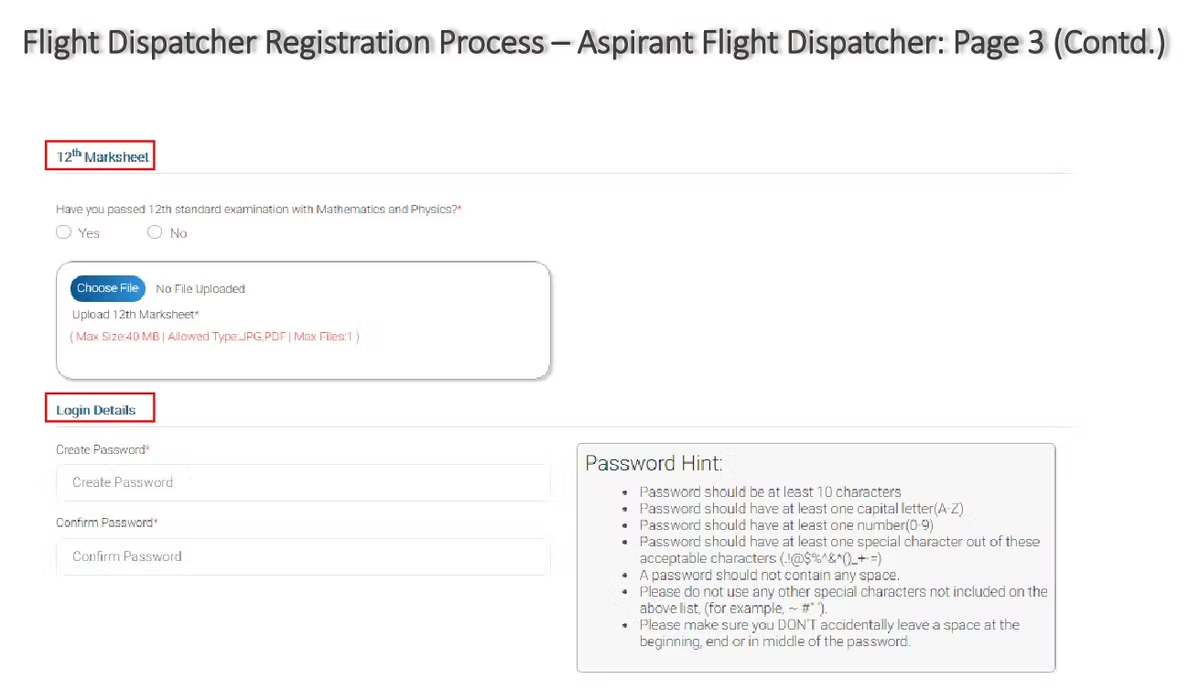
- Scanned copies of your class 10 and class 12 mark sheets.
- The educational qualification behind those mark sheets: a pass in the 10+2 examination with Mathematics and Physics as subjects. [VERIFY]
- A clear scanned passport-size photograph and a scanned signature.
Keep these files in the formats the portal accepts, typically JPG or PDF, and within any file-size limits shown on the upload screen. [VERIFY]
For an existing flight dispatcher
- Your existing flight dispatcher (FD) number.
- A valid email address and mobile number for verification.
- One valid identity proof from the accepted list.
- Scanned class 10 and class 12 mark sheets.
- A scanned passport-size photograph and signature.
How to register as a new flight dispatcher on eGCA
If you are applying for the first time, follow these steps with the portal open.
-
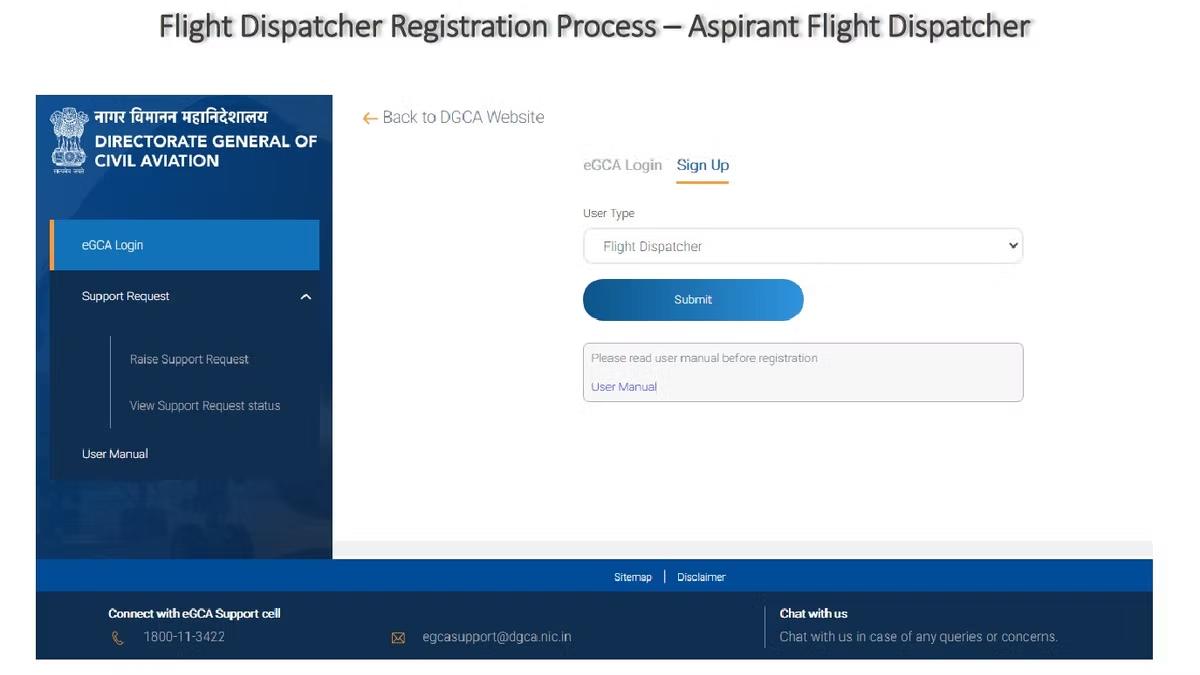
Go to the eGCA portal and start the sign-up flow. When asked for the user type, select flight dispatcher. [VERIFY]
-
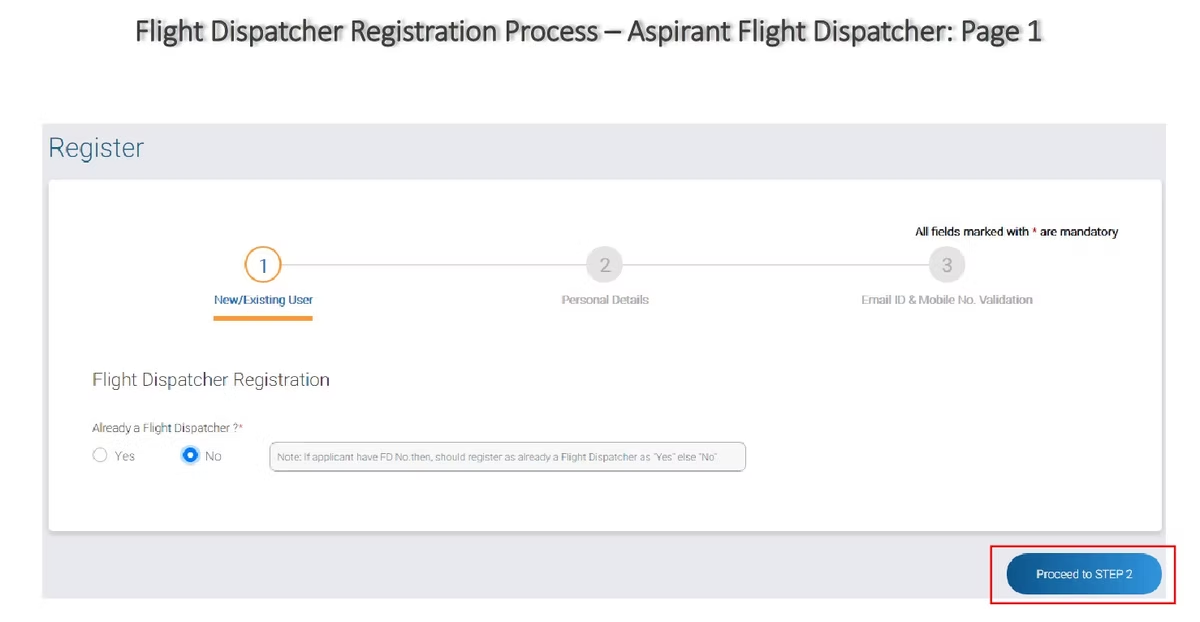
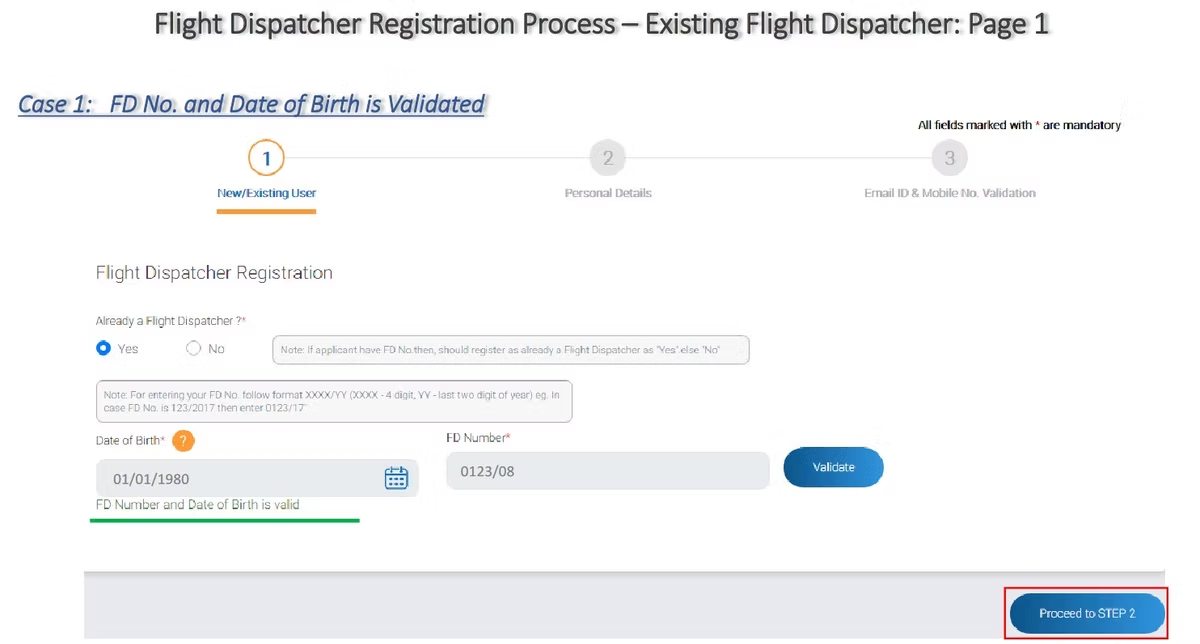
Choose the new user option to begin a fresh registration rather than linking to an existing record.
-
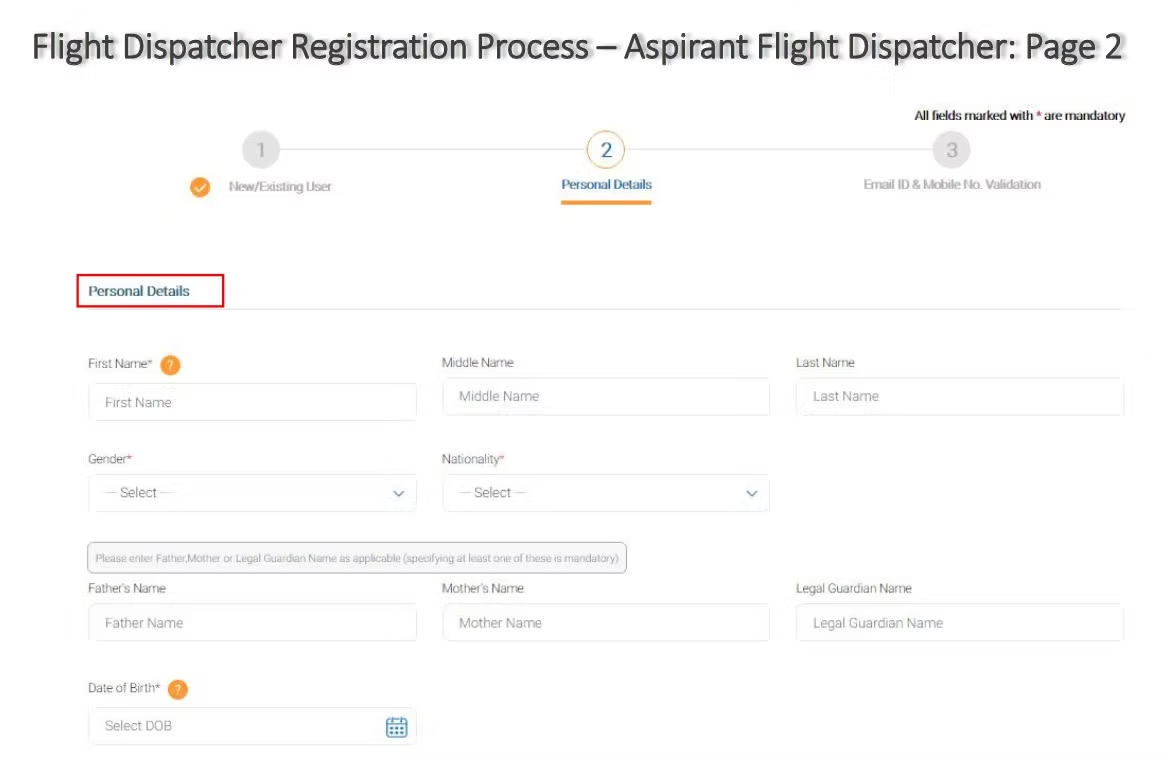
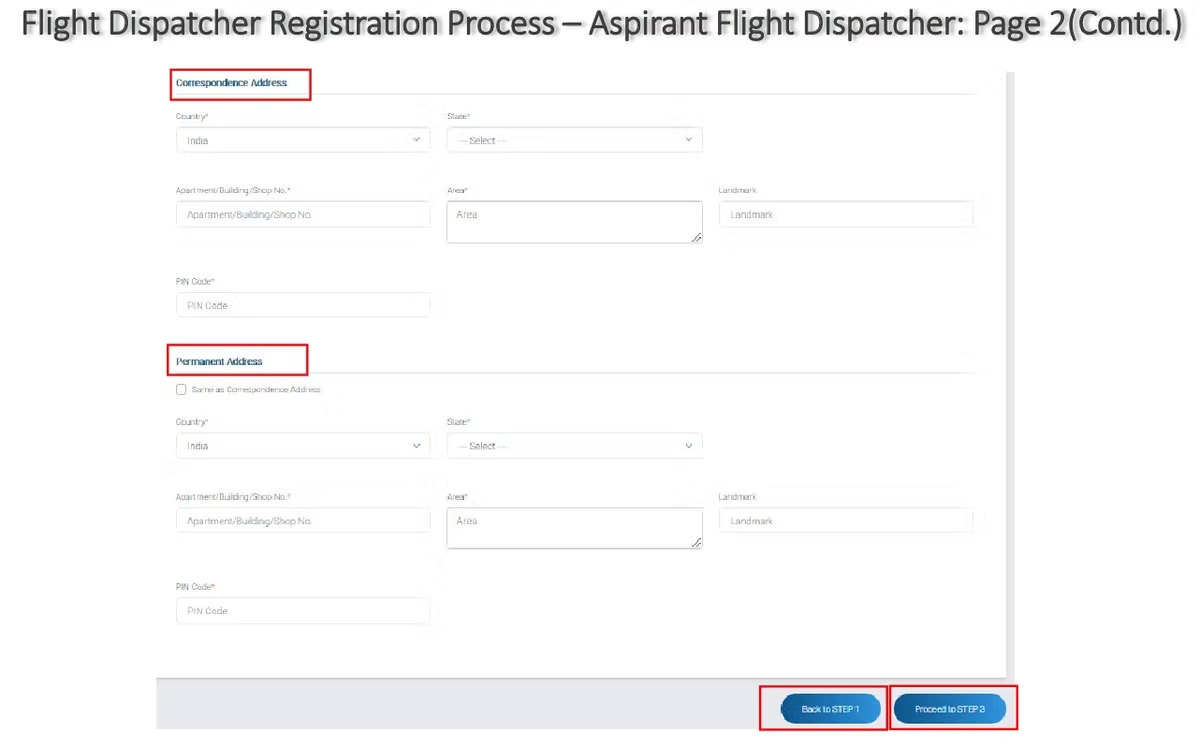
Fill in your personal details. This includes your name, gender, nationality, date of birth, and address. Complete every field marked as mandatory, because the form will not submit with required fields left blank.
-
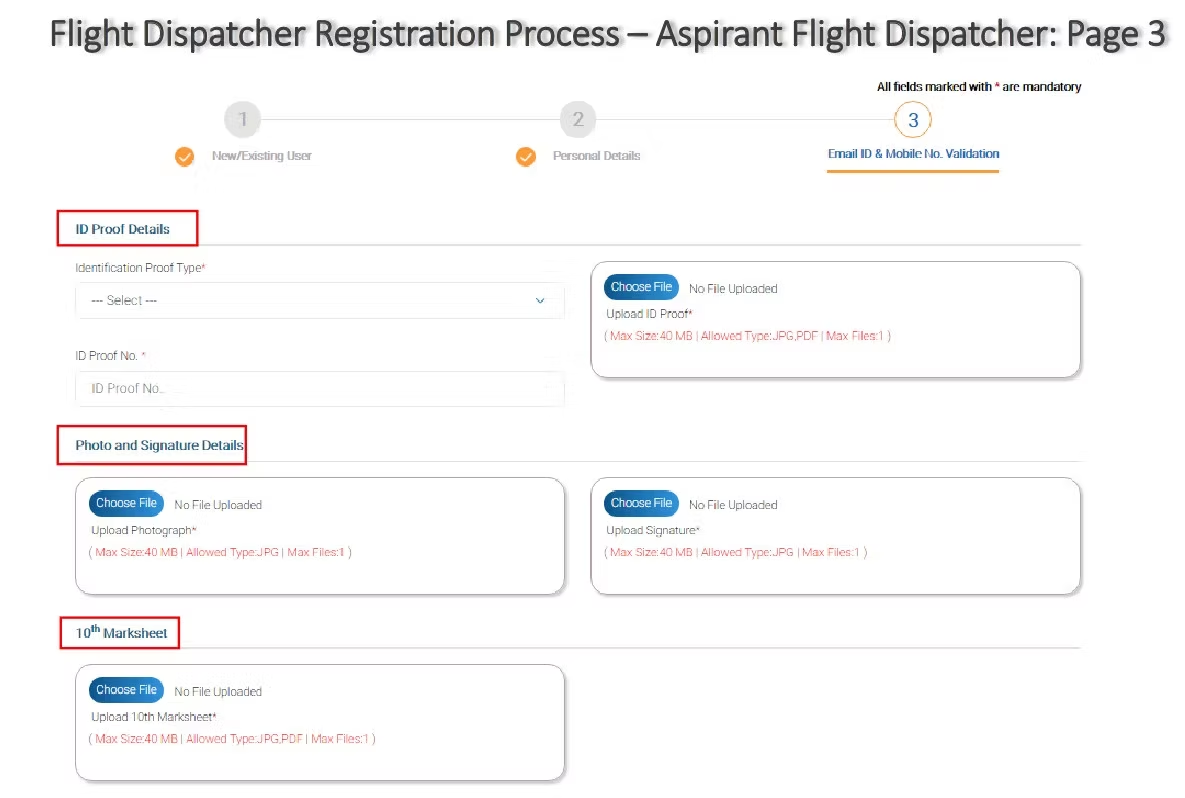
Upload your documents. Add your identity proof and its details, your photograph and signature, and your class 10 and class 12 mark sheets. Use the file formats the portal accepts, normally JPG or PDF. [VERIFY]
-
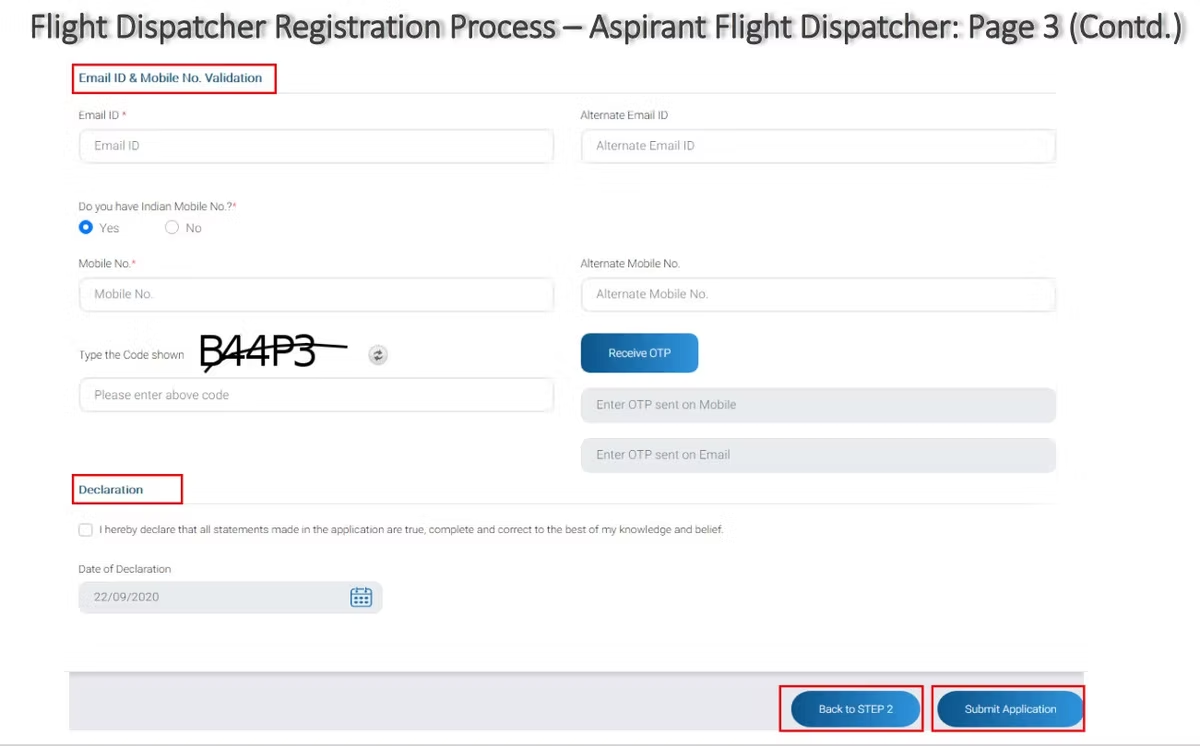
Enter your email address and mobile number. The portal sends a one-time password (OTP) to both, so verify each one to confirm they belong to you. [VERIFY]
-
Read and accept the declaration, then submit your application.
Once submitted, your application moves into DGCA processing. Keep your login details safe, because you will use the same account to track the application and for any future dispatcher-related steps.
Registration flow at a glance

How to register if you already have a flight dispatcher number
If you already hold a flight dispatcher number and are bringing your record onto eGCA, the path is shorter.
-
Go to the eGCA portal and start the sign-up flow. When asked for the user type, select flight dispatcher. [VERIFY]
-
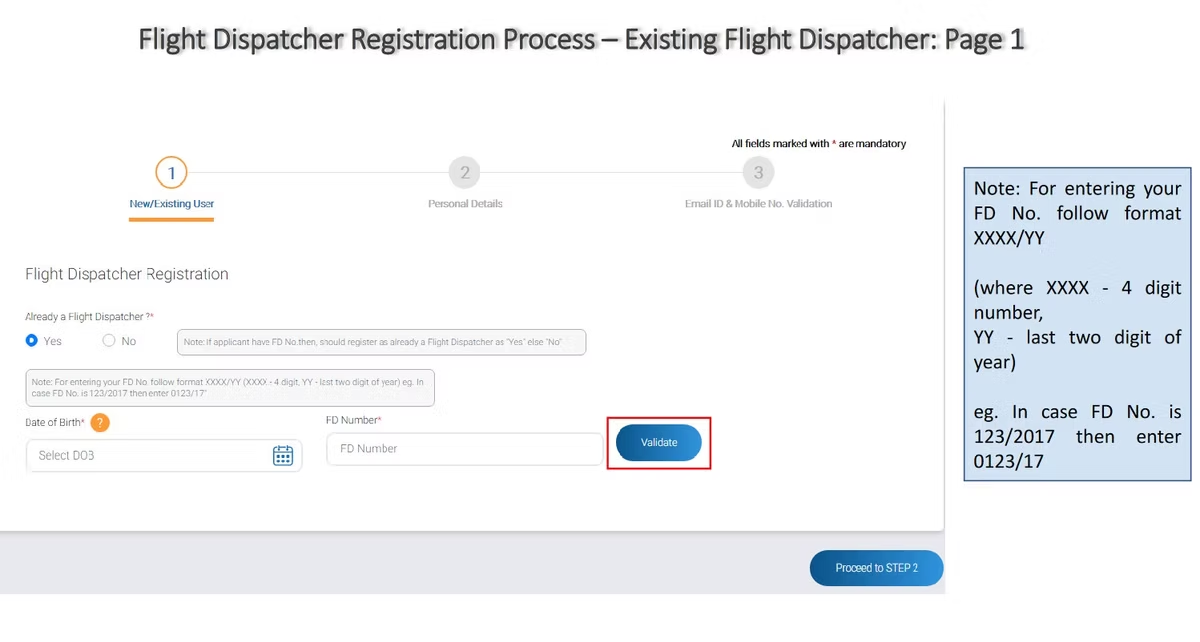
Choose the existing user option, enter your flight dispatcher number and date of birth, then select validate. [VERIFY]
If the system does not validate your FD number and date of birth, do not keep retrying with the same details. Raise a support request through the portal so DGCA can check your record. [VERIFY] Mismatches here are usually a data issue on the existing record rather than a problem with your entries.
Registration on eGCA versus a DGCA-approved dispatcher course
This is the point that trips up a lot of people searching for how to become a flight dispatcher, so it is worth separating clearly.
Registration on eGCA is an administrative step. It creates your record in the DGCA system and gives you a flight dispatcher number. It does not, on its own, qualify you to perform flight dispatch duties.
A DGCA-approved flight dispatcher course is the training side. It is the structured course delivered by a DGCA-approved institute that covers the knowledge a dispatcher needs, such as flight planning, meteorology, navigation, air regulations, and aircraft performance. [VERIFY] Completing approved training is part of the path toward being authorised to act as a flight dispatcher, and the specific course and examination requirements are set by DGCA. [VERIFY]
In short: the eGCA registration covered in this guide handles your identity and record with the regulator, while a DGCA-approved course handles your training and competence. You will generally need both. Because course content, eligibility, and examination requirements are set by DGCA and can change, confirm the current requirements against the official DGCA guidance and your chosen approved institute before you enrol. [VERIFY]
Keeping your hours and records once you are flying ops
Flight dispatch is a records-heavy role, and so is the wider flight operations environment you work alongside. If your career also involves logging flight time, whether you fly or you are tracking it for an operation, keeping accurate, regulator-ready records matters as much as the registration step.
Wingman is a digital pilot logbook used by 30,000+ pilots across 400+ airlines, keeping hours, currency, and licence details in one place across iOS, Android, and Web. It is a global product rather than an India-only tool, and its exports are built to be compliant with regulators including DGCA, the FAA, EASA, UK CAA, GCAA, GACA, NZCAA, HKCAD, CASA, and CAAS. For India specifically, there is a focused walkthrough on keeping a DGCA pilot logbook in India. There is a free tier up to 250 logged hours, so you can start without committing anything up front.
Frequently asked questions
What is eGCA used for in flight dispatcher registration?
eGCA is the DGCA e-Governance of Civil Aviation portal. For a flight dispatcher, it is where you create your record, upload your documents, and obtain or link your flight dispatcher number. The portal is at https://egca.gov.in.
What documents do I need to register as a flight dispatcher on eGCA?
For a first-time applicant, you typically need a valid identity proof, your class 10 and class 12 mark sheets, a passport-size photograph, a signature, and an active email address and mobile number that are not already registered. Existing dispatchers also need their flight dispatcher number. Keep scans in the accepted formats, usually JPG or PDF. [VERIFY]
Is registering on eGCA the same as completing a flight dispatcher course?
No. eGCA registration is an administrative step that creates your record and flight dispatcher number. A DGCA-approved flight dispatcher course is the training and examination side. You generally need both, and the course requirements are set by DGCA. [VERIFY]
My flight dispatcher number is not being validated. What should I do?
If the existing-user flow does not validate your flight dispatcher number and date of birth, do not keep retrying with the same details. Raise a support request through the portal so DGCA can check your record for a data mismatch. [VERIFY]
How old do I need to be to register as a flight dispatcher?
A first-time applicant should generally be at least 21 years old, alongside meeting the educational and document requirements. Confirm the current eligibility against DGCA guidance before you apply. [VERIFY]
← All articles