Pilot salary in India: how much airline pilots earn in 2026
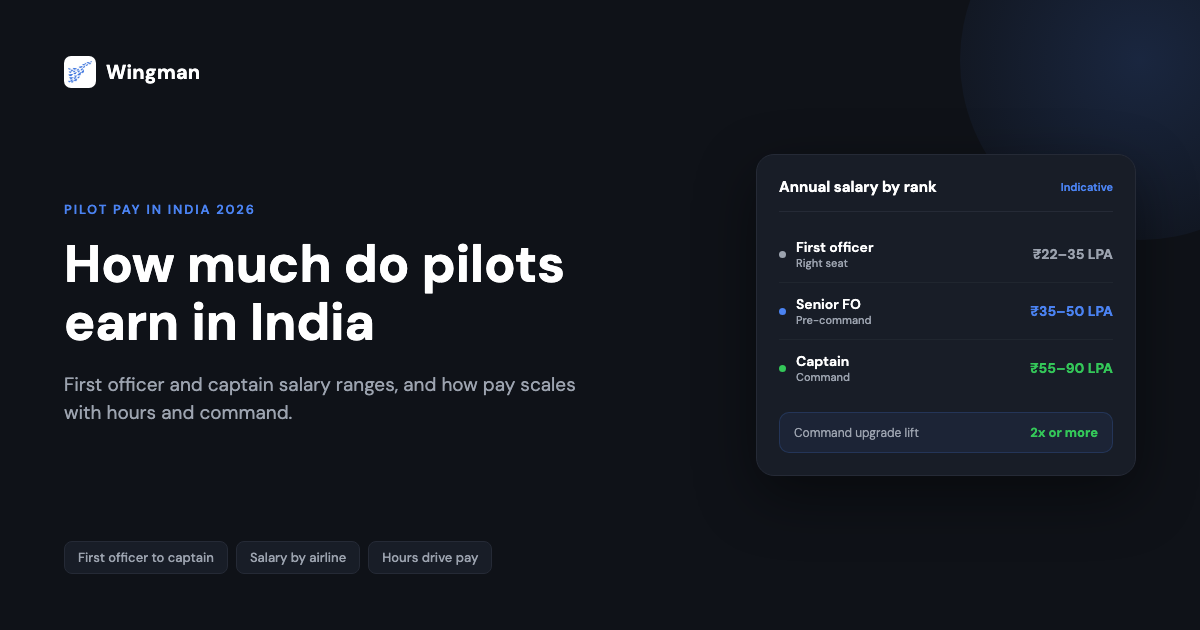
A flying career in India draws people in for the work itself, but the pay is a fair part of the appeal. Airline pilot salaries here are among the higher earnings available to a young professional, and they keep rising as you build hours and move from the right seat to the left. This guide sets out what pilots actually earn at the major Indian carriers in 2026, how pay is structured, and the factors that move your number up over a career.
The figures below are market estimates drawn from public reporting and industry discussion rather than published pay scales, since most Indian airlines do not disclose pilot compensation. Treat them as bands, not guarantees. Each airline negotiates differently, and your actual package depends on your rank, your aircraft type, your seniority, and the contract you sign. Every salary range in this guide is tagged for verification so it can be checked against the latest sources before you rely on it.
What shapes a pilot’s salary in India
Before looking at individual airlines, it helps to understand the levers that decide where you land within a range.
- Rank. A first officer (co-pilot) earns a fraction of what a captain earns. The jump to command is the single largest pay increase in a flying career.
- Flying hours. Most Indian carriers pay a fixed base plus an hourly flying allowance, so the more sectors you fly in a month, the more you take home. Hours also build the experience that qualifies you for command and for moves to better-paying operators.
- Aircraft type. A type rating is a certification to fly a specific aircraft family, such as the Airbus A320 or the Boeing 737. Wide-body ratings and aircraft in short supply of qualified crew tend to command more.
- Seniority within the airline. Pay scales typically step up year on year, and seniority also governs roster choice, base, and upgrade timing.
- Domestic versus international flying. International sectors usually carry layover allowances and per-diems that lift the total package.
Pilot salary by airline in India
The table below gives indicative annual ranges for first officers and captains at India’s main scheduled carriers as of 2026. Vistara completed its merger into Air India in late 2024, and AirAsia India was rebranded and folded into Air India Express, so those names no longer operate independently. GoAir (later Go First) suspended operations in 2023 and is not included.
| Airline | First officer (per year) | Captain (per year) |
|---|---|---|
| IndiGo | ₹22-35 lakh [VERIFY] | ₹55-90 lakh [VERIFY] |
| Air India | ₹22-34 lakh [VERIFY] | ₹50-85 lakh [VERIFY] |
| Air India Express | ₹20-30 lakh [VERIFY] | ₹45-70 lakh [VERIFY] |
| Akasa Air | ₹22-32 lakh [VERIFY] | ₹50-75 lakh [VERIFY] |
| SpiceJet | ₹20-30 lakh [VERIFY] | ₹45-70 lakh [VERIFY] |
These ranges blend base pay with the flying allowances that make up a large share of a pilot’s monthly earnings, so a pilot flying near the maximum permitted hours sits at the top of the band and one on light rosters sits lower. [VERIFY] Senior wide-body captains on international fleets can earn above the captain figures shown here. [VERIFY]
A few points are worth keeping in mind when reading any salary table for Indian pilots:
- Numbers move with the hiring cycle. When carriers expand fleets and compete for crew, pay and joining terms improve. When the market softens, they tighten.
- Trainee and cadet first officers usually start below the ranges above, then step up once they are line-released and flying regular sectors. [VERIFY]
- Expatriate captains, hired when an airline grows faster than it can promote from within, are often on separate contracts that do not reflect the domestic scale. [VERIFY]
How pay scales with hours, type rating, and command
The headline reason pilot pay rises so much over a career is the move from first officer to captain. Reaching command is a function of total flying hours, hours on type, your performance in training and checks, and a seat being available on your fleet at your base. In a fast-growing airline the upgrade can come in a handful of years; in a slow-growth period it can take much longer because it depends on seniority and vacancies.
Three things tend to lift earnings along the way:
- Accumulating hours. Because flying allowance is paid per hour or per sector, a pilot who flies more during a roster month earns more that month, within the duty and rest limits set by the regulator. Total hours also unlock the next career step.
- Holding an in-demand type rating. A current rating on a widely operated narrow-body such as the A320 family keeps you employable across several carriers, while a wide-body rating on long-haul fleets generally pays more.
- Upgrading to command. The captain bands above are far higher than the first officer bands at the same airline, which is why the upgrade is the defining financial event of a flying career.

Beyond rank, the same pilot can earn meaningfully more by moving between operators or fleets, since pay scales and allowance structures differ from airline to airline.
Allowances and benefits beyond base pay
A pilot’s gross salary is only part of the picture. Indian carriers typically add a layer of allowances and benefits on top of base pay, which can include flying or sector allowances, layover and per-diem payments on overnight duties, and provisions such as medical cover and provident fund contributions. [VERIFY] Some airlines also offer staff travel concessions and accommodation support depending on base and contract. [VERIFY] When you compare two offers, look at the full package rather than the base figure alone, because the allowance structure can change the take-home number significantly.
It is also worth weighing the cost side of entering the profession. Training to a Commercial Pilot Licence and adding a type rating is a substantial investment in India, and many pilots begin their careers carrying training loans. The salary bands above look generous against most graduate starting salaries, but the early years often go toward recovering training costs before the larger captain earnings arrive.
Keeping an accurate record of the hours that pay you
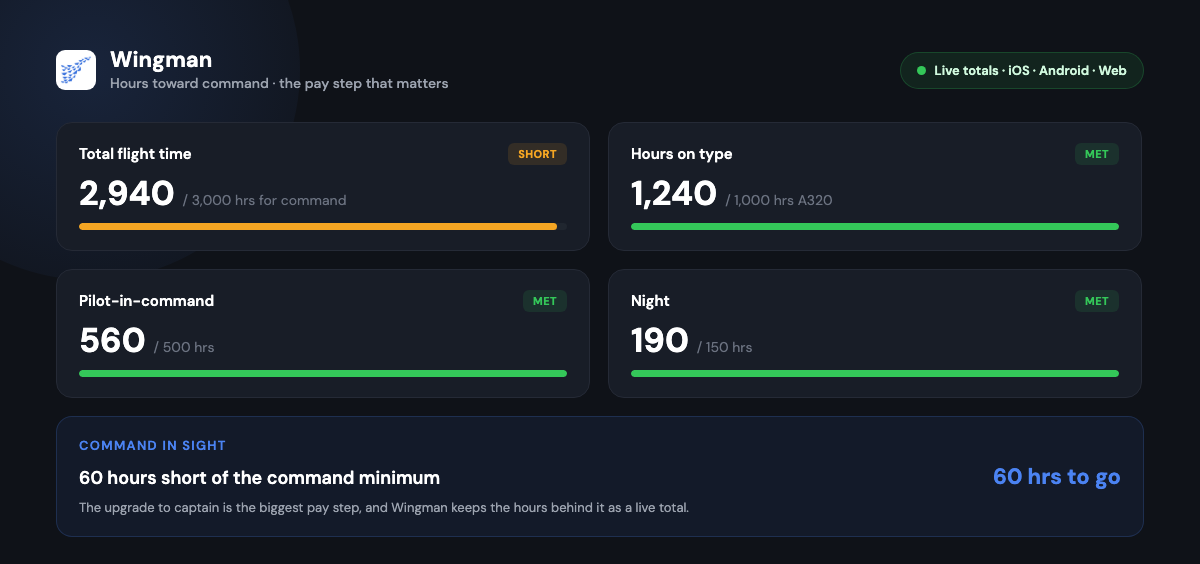
Because so much of a pilot’s earnings and career progression is tied to flying hours, an accurate logbook is not just a regulatory requirement, it is a record of the experience that drives your pay and your next upgrade. Wingman is a digital pilot logbook used by 30,000+ pilots across 400+ airlines, and it keeps your hours, currency, and licence details in one place across iOS, Android, and Web.
Wingman is a global product rather than an India-only tool, and it produces regulator-compliant exports for DGCA alongside the FAA, EASA, UK CAA, GCAA, GACA, NZCAA, HKCAD, CASA, and CAAS. It can import your roster automatically from systems such as AIMS eCrew, NavBlue RAIDO, CAE Crew Access, ARMS, CESAR, Sabre, FLICA, and PDC CrewConnex, so your hours stay current without manual entry. For India specifically, there is a focused walkthrough on keeping a DGCA pilot logbook in India. There is a free tier up to 250 logged hours, so you can start while you are still building toward your licence, and Pro is ₹4,499 per year in India.
Frequently asked questions
How much does an airline pilot earn in India?
As a broad guide for 2026, first officers at the major Indian carriers earn roughly ₹20-35 lakh per year and captains roughly ₹45-90 lakh per year, with senior wide-body captains earning more. [VERIFY] These are market estimates that vary by airline, rank, aircraft type, and hours flown, so treat them as ranges rather than fixed figures.
Which Indian airline pays pilots the most?
Pay is broadly comparable across the larger scheduled carriers, and the bigger differences come from rank, fleet, and seniority than from the airline name alone. Wide-body international fleets generally pay senior captains the most. [VERIFY] Because airlines do not publish pilot pay scales, any ranking should be checked against current sources.
How much do trainee or cadet pilots earn when they start?
Trainee and cadet first officers typically start below the first officer ranges in this guide and step up once they are line-released and flying regular sectors. [VERIFY] Early earnings also often go toward repaying training and type-rating costs.
Why is there such a large jump from first officer to captain pay?
Command pay is far higher because a captain carries final responsibility for the aircraft and crew. Reaching command depends on total hours, hours on type, training performance, and a vacancy at your base, which is why the upgrade is the single biggest financial step in a flying career.
Do flying hours affect how much a pilot earns?
Yes. Most Indian carriers pay a base plus a flying or sector allowance, so earnings in a given month rise with the hours flown, within regulatory duty and rest limits. Total hours also build the experience that qualifies you for command and for moves to better-paying fleets.
← All articles